Z-Image Base vs Stable Diffusion XL: Ultimate 2026 Comparison
For two years, Stable Diffusion XL (SDXL) has been the go-to model for open-source AI image generation. But Z-Image Base is challenging that dominance, offering a modern architecture that delivers impressive results with a fraction of the computational resources. After extensive testing across diverse workflows, we've compiled this comprehensive comparison to help you decide which model deserves your GPU cycles.
The Architectural Revolution: What's Under the Hood
Before diving into quality comparisons, it's essential to understand what makes these models fundamentally different:
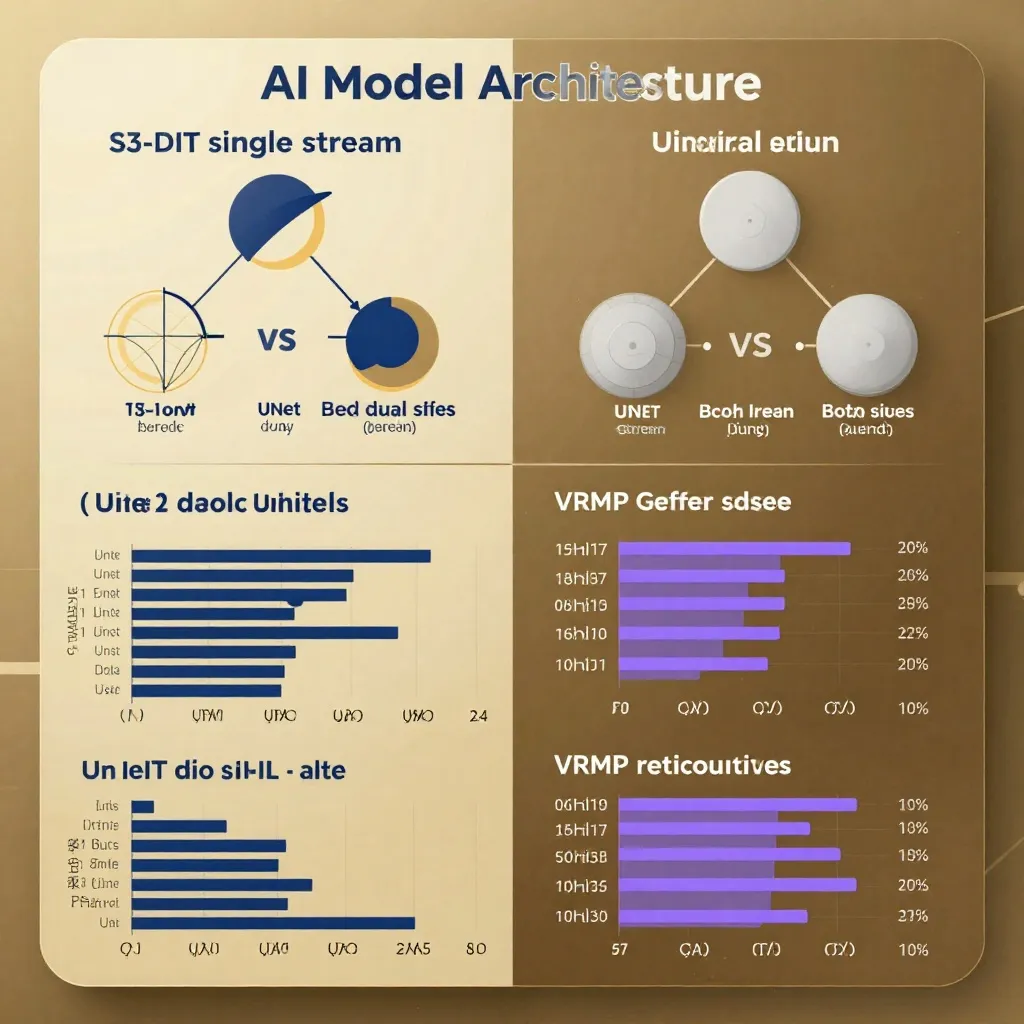
Z-Image Base uses the S3-DiT (Scalable Single-Stream Diffusion Transformer) architecture—a revolutionary single-stream design where text tokens, visual semantic tokens, and image VAE tokens are concatenated into one unified sequence. This approach enables remarkable parameter efficiency, achieving competitive quality with just 6 billion parameters.
Stable Diffusion XL employs a dual-stream UNet architecture with separate text and image processing paths, plus a refiner model for post-processing. The base model contains 3.5 billion parameters, while the refiner adds another 6.6 billion, totaling over 10 billion parameters across the pipeline.
The architectural difference isn't just technical trivia—it translates to real-world differences in how these models perform, what hardware they need, and what kinds of outputs they produce.
Photorealism: The Ultimate Quality Test
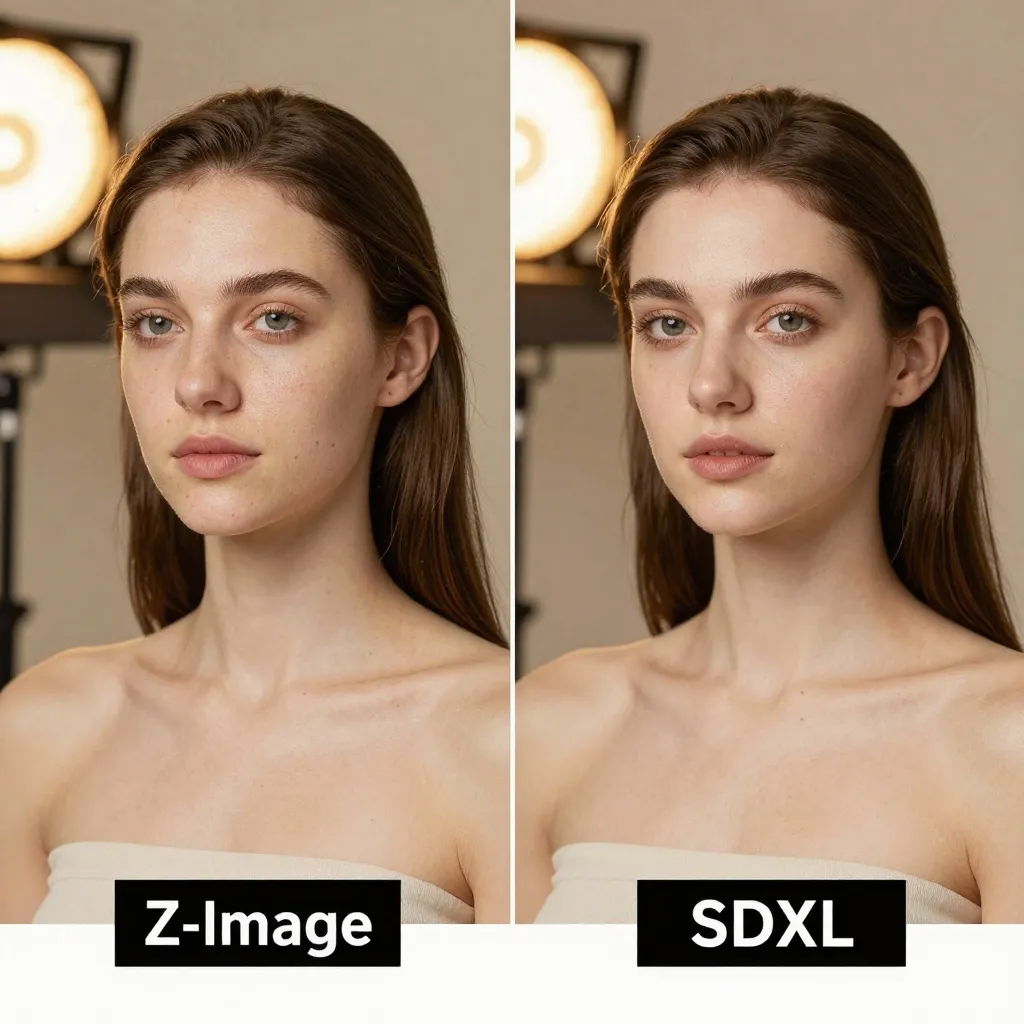
For realistic portraits, product photography, and scenes that could pass as photographs, we tested both models with identical prompts focused on natural lighting, textures, and details.
Portrait Photography
Z-Image Base advantages:
- Superior skin texture and micro-details (pores, fine lines, subsurface scattering)
- More natural lighting gradation and soft shadows
- Better eye reflections and hair strand detail
- Stronger prompt adherence for specific poses and expressions
SDXL advantages:
- More diverse interpretations of the same prompt
- Better composition variety across generations
- Stronger stylized portrait capabilities (when artistic intent is desired)
In blind testing, Z-Image Base consistently produces more photorealistic portraits with textures that feel genuine rather than AI-generated. SDXL, however, offers more creative variety—useful when you want to explore multiple interpretations of a concept.
Winner: Z-Image Base for pure photorealism
Landscape and Environmental Scenes
For landscapes, architectural visualization, and environmental scenes:
Z-Image Base:
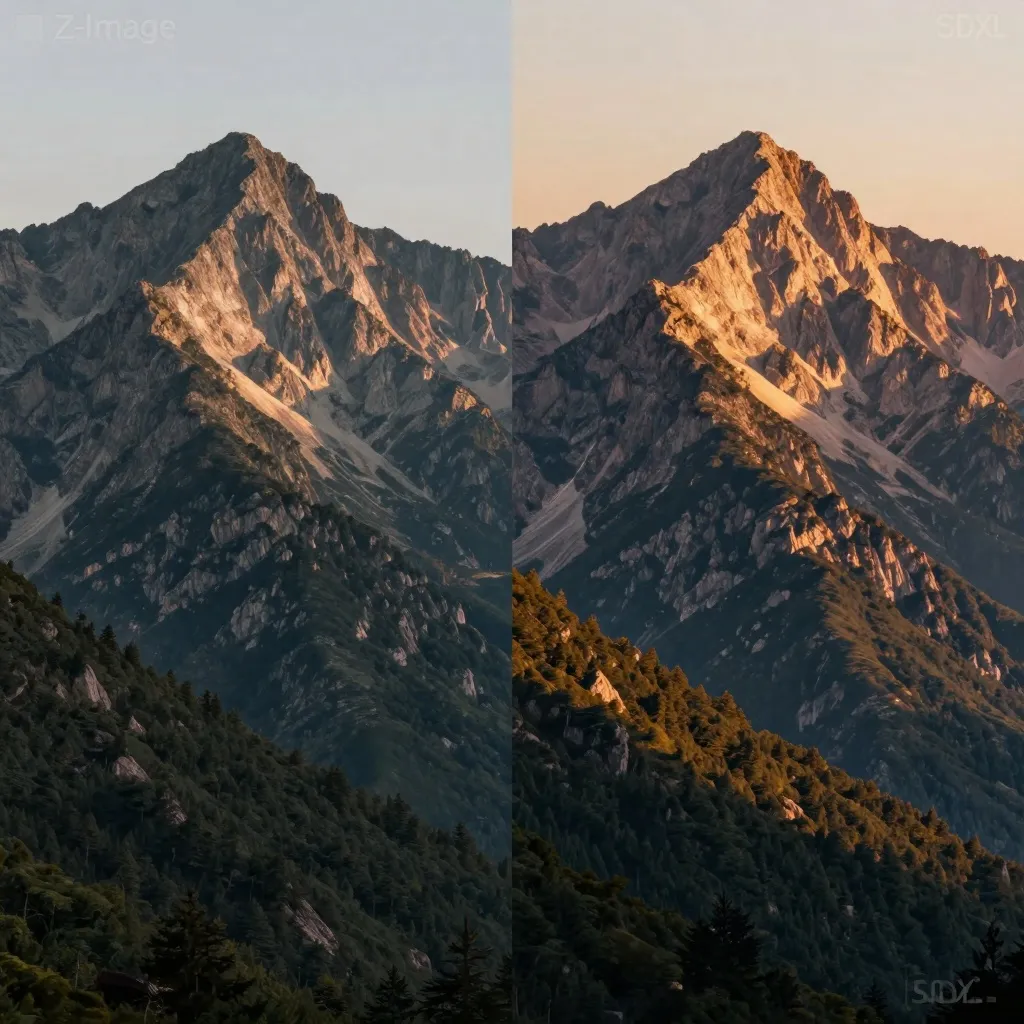
- Excels at realistic lighting and atmospheric effects
- Strong at material rendering (stone, metal, glass, water)
- Better integration of elements into cohesive scenes
- More consistent physical accuracy (reflections, shadows, perspective)
SDXL:
- More creative and artistic interpretations
- Better at stylized landscapes and fantasy environments
- Wider variety of compositional approaches
- Stronger at atmospheric mood and emotional tone
Winner: Tie—choose Z-Image Base for photorealism, SDXL for artistic landscapes
Text Rendering and Typography
This is where Z-Image Base delivers a knockout punch.
Z-Image Base:
- Excellent bilingual text rendering (English and Chinese)
- Accurate spelling even for longer text strings
- Text integrates naturally into scenes with proper perspective
- Reliable typography for posters, signs, and UI mockups
SDXL:
- Historically weak at text (though improved from SD 1.5)
- Still struggles with longer phrases and complex typography
- Often produces gibberish or misspelled text
- Requires significant prompt engineering and iteration
Winner: Z-Image Base (by a wide margin)
For commercial work requiring accurate text—product packaging, posters, signage, UI mockups—Z-Image Base is the clear choice. SDXL requires extensive post-processing to fix text errors.
Prompt Adherence and Control
How well does each model understand and follow your instructions?
Z-Image Base:
- Exceptional prompt adherence across the board
- Better at following specific technical instructions (camera settings, lighting)
- More consistent interpretation of complex, multi-part prompts
- Natural language processing feels more modern and intuitive
SDXL:
- Good prompt following, but requires more prompt engineering
- Benefits from comma-separated tags and weighted prompts
- More sensitive to prompt structure and syntax
- Can struggle with long, descriptive natural language prompts
Winner: Z-Image Base for ease of use and reliability
With Z-Image Base, you can write prompts as natural sentences and get consistent results. SDXL often requires more experimentation with prompt structure, emphasis, and negative prompts.
Speed and Performance
This is where architectural differences translate directly to workflow efficiency.
Inference Speed
Z-Image Base:
- 50 steps typical (full quality)
- ~20-35 seconds on RTX 4090
- ~2-4 minutes on RTX 3060 with GGUF quantization
- Efficient due to S3-DiT architecture
SDXL:
- 20-50 steps typical (plus refiner passes)
- ~25-45 seconds on RTX 4090 (base only)
- ~60-90 seconds on RTX 4070 Ti
- Significantly slower with refiner model
Winner: Z-Image Base (though SDXL Turbo narrows this gap for quick iterations)
VRAM Requirements
Z-Image Base:
- 12GB VRAM comfortable (BF16)
- 8GB workable with quantization (FP8/GGUF)
- 6GB possible with aggressive CPU offloading
- More efficient memory usage
SDXL:
- 12GB minimum recommended for base model
- 16GB+ recommended with refiner
- 8GB extremely limited (requires heavy offloading)
- Refiner model adds significant VRAM pressure
Winner: Z-Image Base for hardware accessibility
For users with 8-12GB VRAM, Z-Image Base offers a significantly better experience. SDXL's refiner model pushes it into 16GB territory for comfortable use.
The Ecosystem: LoRAs, Workflows, and Community
This is where SDXL maintains its advantage.
Z-Image Base ecosystem:
- Newer model with growing community
- Hundreds of LoRAs already available
- Good ComfyUI integration
- Active development on workflows and tools
SDXL ecosystem:
- Mature ecosystem with thousands of LoRAs
- Massive library of fine-tuned models for every niche
- Extensive ControlNet support
- Workflow templates for every use case
- Two years of community knowledge and troubleshooting
Winner: SDXL (for now, but Z-Image is catching up fast)
If you need specialized models for specific styles (anime, architectural, photography), SDXL's ecosystem is unbeatable. Z-Image Base's ecosystem is growing rapidly but hasn't reached SDXL's depth yet.
Artistic Style and Diversity
Z-Image Base:
- Excels at photorealistic styles
- Strong at natural media (oil painting, watercolor, charcoal)
- Better for realistic lighting and textures
- More consistent across generations
SDXL:
- Incredible diversity of artistic styles
- Strong at stylized and abstract art
- Better for creative experimentation
- More variety across generations with same seed
Winner: SDXL for artistic diversity, Z-Image Base for consistency
If your work requires exploring multiple interpretations and artistic approaches, SDXL's diversity is valuable. If you need consistent, predictable results for commercial work, Z-Image Base delivers.
Real-World Use Case Recommendations
Based on our testing, here's when to choose each model:
Choose Z-Image Base when:
- Photorealism is your top priority—portraits, products, architectural visualization
- Text rendering matters—posters, packaging, UI mockups, signage
- Limited VRAM—8-12GB GPU setups
- Prompt adherence is critical—commercial work, client projects
- Bilingual needs—English and Chinese text rendering
- Faster iteration—sub-minute generation times
Choose SDXL when:
- Artistic diversity is important—exploring creative concepts
- You need specialized LoRAs—anime, fantasy, niche styles
- Style experimentation—trying multiple aesthetic approaches
- ControlNet workflows—pose, depth, canny control
- Mature ecosystem—extensive community resources and troubleshooting
- Artistic over realistic—stylized, painterly, abstract outputs
Cost Analysis: What You'll Actually Pay
Let's talk real numbers for generating 1,000 images at 1024×1024:
Cloud API Costs
Z-Image Base: ~$8-15 depending on provider
SDXL: ~$12-25 depending on provider
Self-Hosted (H100 cloud GPU)
Z-Image Base: ~$15-20 (faster generation = less GPU time)
SDXL: ~$25-35 (slower = more GPU hours, refiner adds cost)
Self-Hosted (Consumer RTX 4090)
Z-Image Base: $5-10 in electricity
SDXL: $10-15 in electricity (longer generation times)
Over high-volume production runs (10,000+ images), Z-Image Base's efficiency advantage translates to significant cost savings.
Migration Guide: Switching from SDXL to Z-Image Base
If you're considering making the switch, here's what you need to know:
Prompt Translation
SDXL prompts often work well in Z-Image Base, but you'll get better results by:
- Converting comma-separated tags to natural language
- Removing SDXL-specific syntax (e.g., WEIGHTING tokens)
- Writing descriptive sentences instead of keyword lists
- Being more specific about lighting and camera settings
Workflow Adjustments
- Lower step count: Z-Image Base peaks at 50 steps vs SDXL's 20-50
- Adjust expectations for diversity: Z-Image Base is more consistent, less random
- Text rendering: You'll spend far less time fixing typos
- LoRA compatibility: You'll need to find or train Z-Image-specific LoRAs
Hardware Considerations
- Same VRAM, better performance: If SDXL runs on your GPU, Z-Image Base will run faster
- Upgrade possibilities: Z-Image Base's efficiency makes lower-tier GPUs more viable
- Quantization options: GGUF versions enable CPU inference for desperate situations
The Verdict: Which Model Should You Choose?
Both models are exceptional, but they excel at different things:
For pure photorealism and commercial work: Z-Image Base maintains a clear advantage, particularly in skin rendering, text accuracy, and prompt adherence. If you're doing product photography, portraits, or any work where accuracy matters, Z-Image Base delivers.
For artistic exploration and style diversity: SDXL remains the king. Its ecosystem of fine-tuned models and natural tendency toward creative interpretation make it ideal for artists, illustrators, and creative experimentation.
For efficiency and cost: Z-Image Base wins. Faster generation, lower VRAM requirements, and better prompt adherence mean more iterations per dollar and per hour.
For ecosystem maturity: SDXL wins today, but Z-Image Base is growing rapidly. If SDXL's ecosystem depth matters for your work, stay put. If you value cutting-edge architecture and efficiency, Z-Image Base is the future.
The Reality: You Don't Have to Choose
Here's what many professionals are doing in 2026:
- Use Z-Image Base for client work, commercial projects, and photorealism
- Keep SDXL around for creative exploration and specialized LoRA workflows
- Leverage ComfyUI to switch between models seamlessly
- Train custom LoRAs on Z-Image Base for your specific commercial needs
Both models have a place in a well-rounded toolkit. The key is understanding which to reach for based on your immediate goals.
Getting Started
Ready to test these conclusions yourself?
- Z-Image Base: Available for local installation or try it on our z-image-base page. Check out our optimization techniques for the best quality settings.
- SDXL: Available through Stability AI's official platforms and most open-source interfaces.
Both models represent excellent choices in 2026. The "better" model depends entirely on your needs, workflow, and creative goals.
Related Reading: