
Z-Image Review: The New 6B Parameter AI Image Generator That Rivals Flux and Midjourney
The AI image generation landscape is evolving at a breakneck pace. Just when we thought we had seen it all with Flux and Midjourney, a new contender has emerged from Alibaba's Tongyi Lab: Z-Image.
This 6 billion parameter model is making waves for its unique architecture and impressive performance. In this review, we'll dive deep into what makes Z-Image special, how it stacks up against the giants, and whether it deserves a spot in your creative workflow.

What is Z-Image?
Z-Image is a state-of-the-art text-to-image generation model that utilizes a novel Scalable Single-Stream DiT (S3-DiT) architecture. Unlike traditional models that process text and image tokens separately, Z-Image unifies them into a single stream. This allows for more efficient parameter usage and deeper semantic understanding.
One of the standout versions is Z-Image Turbo, a distilled variant designed for sheer speed. It delivers sub-second inference on high-end GPUs while maintaining photorealistic quality.
Key Features
- Bilingual Mastery: It handles both English and Chinese prompts with exceptional accuracy, a feat many Western-centric models struggle with.
- Photorealism: The model excels at generating lifelike textures, lighting, and human features.
- Efficiency: With 6B parameters, it strikes a balance between performance and resource requirements, making it accessible on consumer hardware with 16GB VRAM (or even less for quantized versions).
Z-Image vs. Flux vs. Midjourney
How does it compare to the current market leaders? We've analyzed the pros and cons in our detailed Z-Image vs Flux comparison, but here is a quick summary:
| Feature | Z-Image | Flux.1 | Midjourney v6 |
|---|---|---|---|
| Architecture | S3-DiT (Single Stream) | DiT (Hybrid) | Proprietary |
| Speed | Extremely Fast (Turbo) | Moderate | Slow (Queue based) |
| Realism | High | Very High | Very High |
| Prompt Adherence | Excellent | Excellent | Good |
| Open Source | Yes | Yes | No |
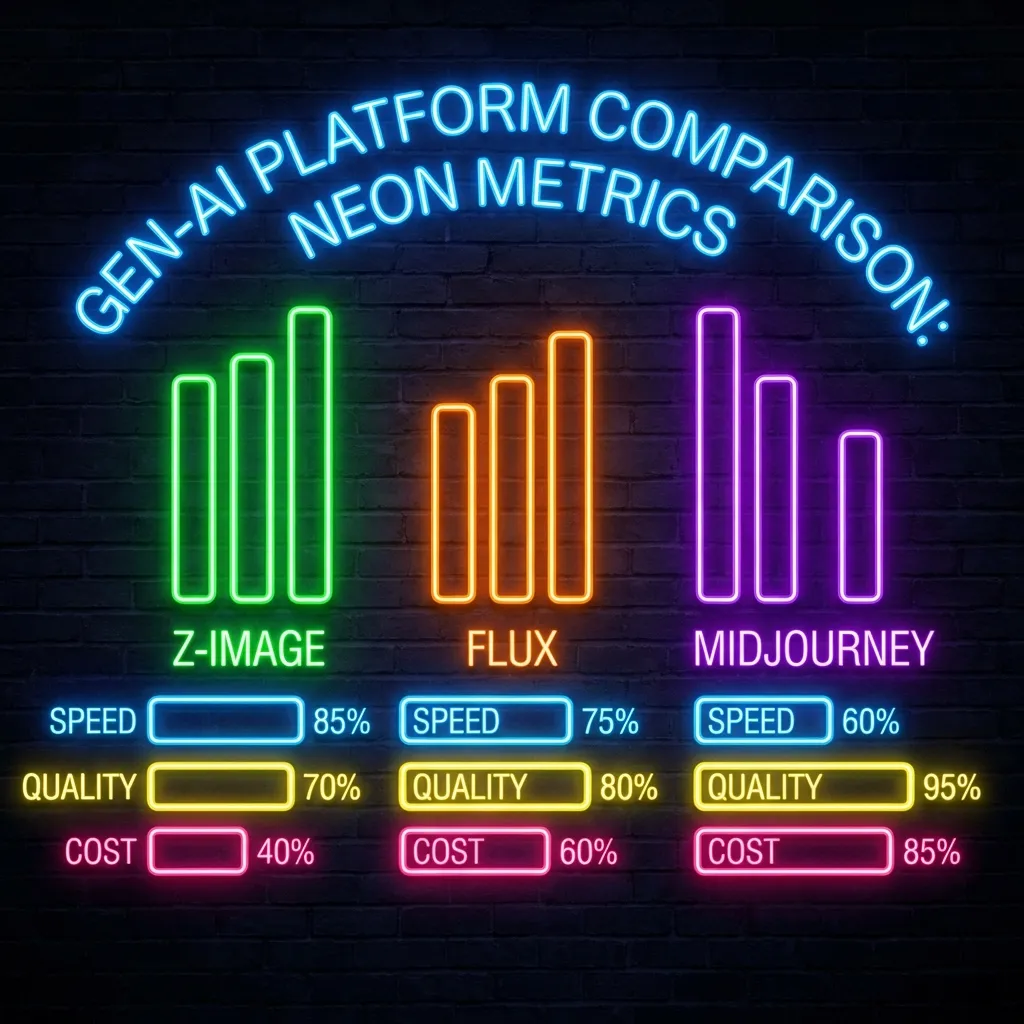
As you can see, Z-Image offers a compelling alternative, especially for developers and users who value open-source flexibility without compromising on speed.
Hands-On Experience
Using Z-Image feels snappy. The Image-to-Image capabilities are particularly robust, allowing for consistent character editing and style transfer. The model adheres strictly to prompts, reducing the "gacha" element often found in older generations.
For those interested in running it on their own machines, we have put together a comprehensive Local Install Guide to get you started with ComfyUI or WebUI.
Conclusion
Z-Image is not just another drop in the ocean of AI models. Its innovative architecture and the existence of the Turbo variant make it a powerful tool for both hobbyists and professionals. Whether you are generating assets for a game or creating photorealistic marketing materials, Z-Image is worth a try.