Identity Lock: The Ultimate Guide to Consistent Characters in Z-Image
"Great AI art is easy. Great AI storytelling requires consistency."
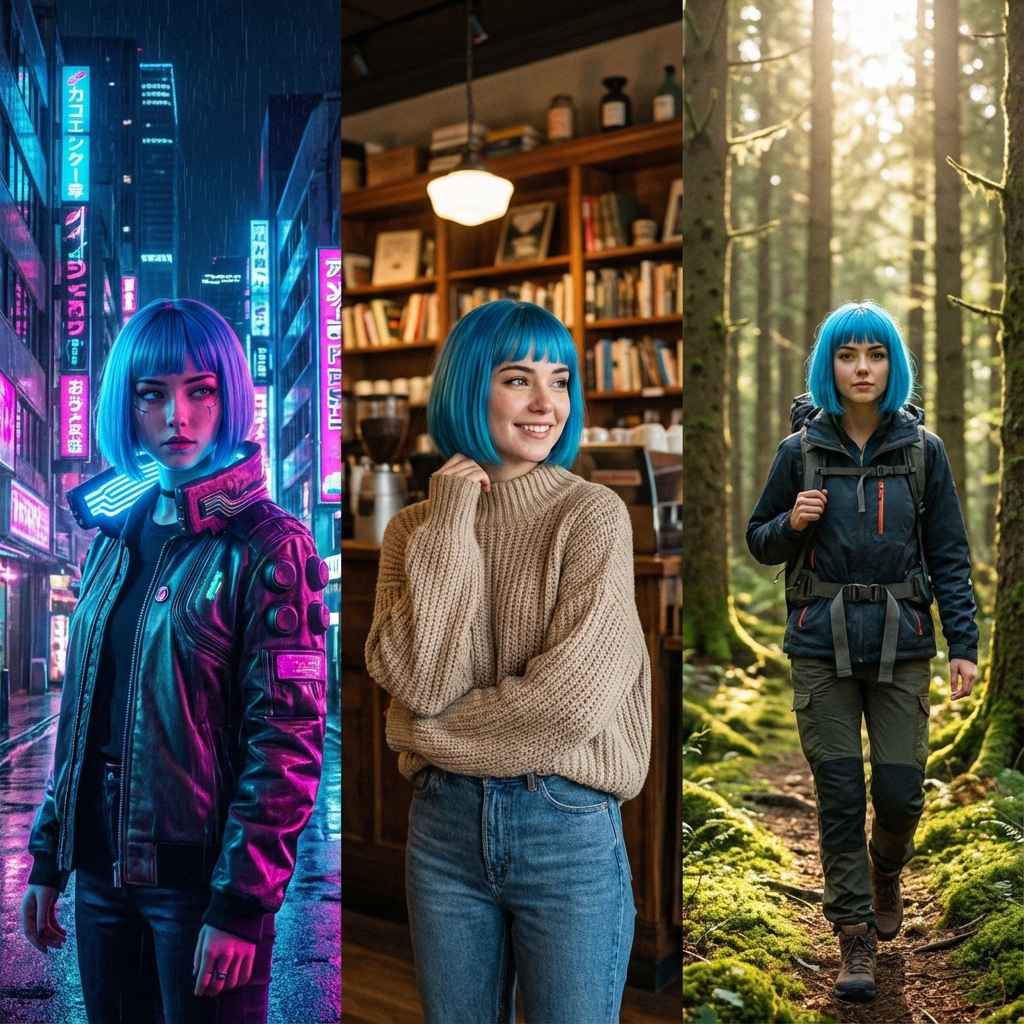
The holy grail of AI generation isn't just making a beautiful person; it's making the same beautiful person, twice.
Whether you're creating a graphic novel, game assets, or a virtual influencer, you need your protagonist to maintain their identity across different scenes, outfits, and lighting conditions.
In this guide, we reveal the "Identity Lock" protocol—a workflow to force Z-Image to respect character consistency without complex training.
The Consistency Problem
Most AI models are "amnesiacs." Every time you hit generate, they roll the dice on a new face.
If you prompt "blue haired cyberpunk girl," you'll get a thousand variations. Different nose shapes, eye colors, hair lengths. This is a nightmare for storytelling.
Strategy 1: The "Visual Anchor" (Seed Control)
The simplest way to maintain consistency is to lock the Seed.
Z-Image (especially the Turbo model) is highly deterministic.
- Generate your perfect character.
- Copy the Seed number.
- Use the exact same seed for your next prompt, changing only the environment description.
Pro Tip: Keep your "Core Identity" prompt segment at the start of your prompt.
Example: "A cyberpunk girl with sharp blue bob cut, ice blue eyes, detailed face..."
Strategy 2: The "Character Sheet" Method
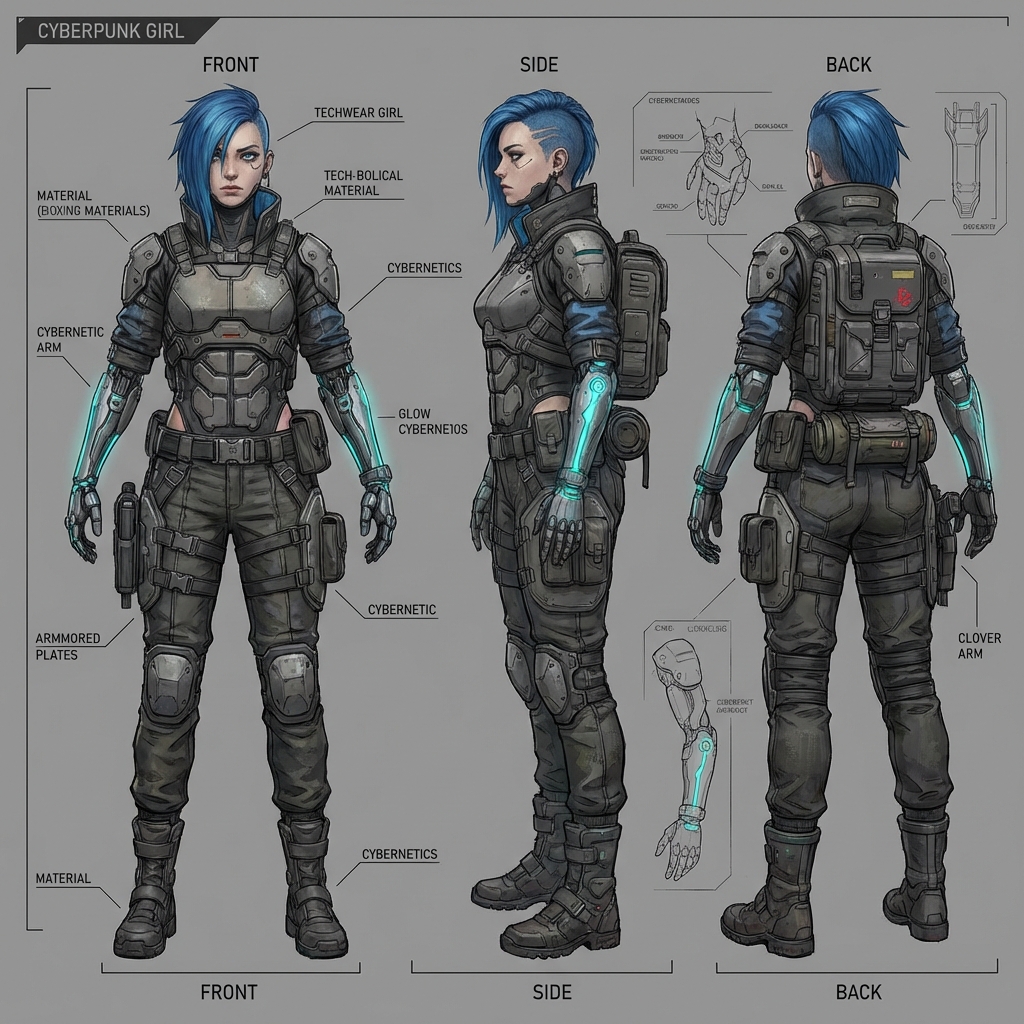
Before you start your story, generate a reference sheet. Z-Image understands the concept of a "Character Sheet" surprisingly well.
Prompt Formula:
"A detailed character sheet of [Character Name/Description]. Front view, side view, and back view. Neutral lighting, solid background. Technical drawing style mixed with 3D render."
This gives you a definitive visual reference. You can even use these images as input for "Image-to-Image" workflows to guide future generations.
Strategy 3: "Identity Lock" with LoRA (Advanced)
For professional consistency, nothing beats a LoRA (Low-Rank Adaptation).
While training a LoRA usually requires a GPU farm, Z-Image's architecture is friendly to lightweight "Character LoRAs." By training on just 10-20 images of your character (generated using Strategy 1 or Strategy 2), you can bake their identity into a small file.
Once trained, you can drop your character into any scenario—from a coffee shop to a movie poster—without their face morphing.

The "Golden Rule" of Consistency
Be specific, or the AI will improvise.
Don't just say "jacket." Say "worn leather bomber jacket with a red patch on the left shoulder." The more specific you are about the unchanging elements, the less "creative freedom" the AI takes with your character's identity.
Ready to Build Your World?
Consistency is what separates a collection of cool images from a coherent project. Start practicing the Seed Lock method today on Z-Image.